Knowledge Sharing Conference
Japan’s MUFG Bank Offers a Banking Perspective on Financing CCS and CCUS Projects
The 11th Knowledge Sharing Virtual Conference, 24 November 2023: Ensuring the transition to clean energy has become increasingly urgent and there is a strong push for its realisation due to the necessity to reduce emission to reach Net Zero targets. Funding the energy transition process is undoubtedly costly although the latest urgent push for clean energy transformation has brought about positive news. Based on the ASEAN Renewable Energy Outlook 202, in 2023, investment in renewables and clean technologies (US$1.7 trillion) exceeded fossil fuel investment (US$1 trillion) in the ASEAN region reflecting the sentiment towards cleaner energy systems among investors worldwide. Carbon, Capture, and Storage (CCS), as well as Carbon, Capture, Utilisation, and Storage (CCUS) technologies, are at the core of carbon neutrality discussions although financing remains the most critical issue for its development and deployment in Southeast Asia.
Amidst the backdrop of a regional goal of commercialising CCS/CCUS by 2030, it is integral to better understand the banking sector’s position on financing these carbon-reducing innovations. The 11th ACN Knowledge Sharing Conference, (MUFG) Bank, covered a wide scope of the banking sector’s expectations, opportunities, and challenges in financing CCS and CCUS technologies to accelerate its commercialisation. The event was hosted by the Economic Research Institute for ASEAN and East Asia (ERIA) which serves as the secretariat of the Asia CCUS Network (ACN).
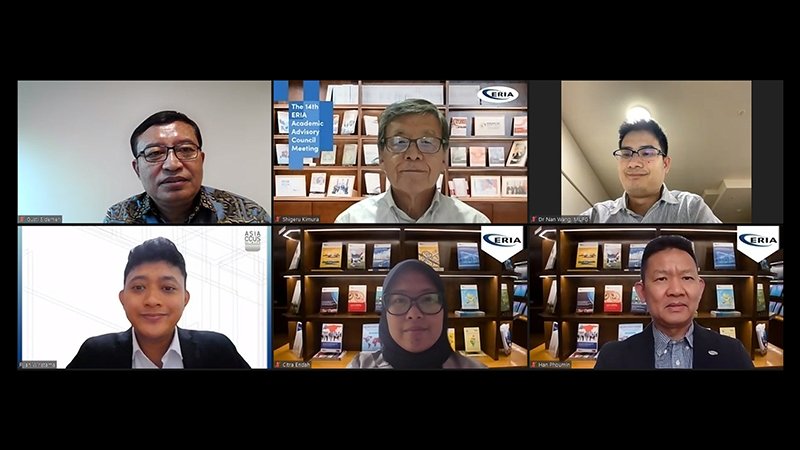
Mr Shigeru Kimura, Special Advisor to the President on Energy Affairs, ERIA underscored the importance of financing CCS/CCUS projects to achieve ASEAN’s 2030 goal in his Opening Remarks. In this regard, Mr Kimura stipulated how ‘private financing institutes will need security to recover the investment to CCS and CCUS business’ highlighting the need to better understand banks’ perspectives on the matter. According to an ACN research study, capturing cost is estimated at approximately US$400-500 million per 500-megawatt (MW) coal power plant. Meanwhile, storage costs are estimated at US$200-300 million per saline aquifer with a 2000-metre depth. Mr Kimura expressed his enthusiasm to learn about the private banking perspectives for financing CCS and CCUS and how they can be harnessed to facilitate its commercialisation in Asia.
Event moderator, Dr Han Phoumin, Senior Energy Economist, ERIA shared how understanding the bank’s perspectives can assist stakeholders in moving CCUS forward to commercialise it. Dr Phoumin also welcomed and introduced the event speaker, Dr Nan Wang, Vice President, Sustainable Business Division, MUFG Bank, Ltd. whose presentation was entitled ‘Opportunities and Barriers for Financing CCS/CCUS from Bank Perspective.’ Dr Wang provided a general, but detailed overview of the global landscape of CCUS deployment and financing, the bankability of CCUS, and public support measures to ensure revenue mitigate the risks.
Dr Wang began his presentation by noting the second wave of CCUS deployment and how, after 2020, there has been increasing momentum in addition to interest in the technology. The first wave was during 2006 – 2013 in which numerous CCUS projects were announced and upscaled, however, over 80% of the announced projects were cancelled or suspended. Despite this undesirable trend, Dr Wang is optimistic about the second wave given that policymakers, especially in Europe and the US, are learning from the failures of the first wave. This has resulted in more feasible and effective policies compared to 10 years ago. Moreover, there were numerous uncertainties in the first wave that financial institutions better understand today in addition to the innovative ways of deploying CCS across a breadth of sectors. Dr Wang personally expressed, ‘The window is shrinking, we don’t have much time for our climate target, so the pressure was felt not only by the financial institutions but also the public sector and industries, so we have to make it work.’
One of the significant changes since the 2000s is the industries and sectors that deploy CCUS which had prioritised the coal power sector, industries, and natural gas processing. From 2010 – 2020, CCUS deployment was predominantly in the natural gas processing sector followed by hydrogen production and fertiliser production; very few were deployed in coal power plants. After 2020, the list of sectors widened further to encompass CCUS projects for ammonia, hydrogen, and ethanol while the number of transporting and storage projects grew reflecting a strong business innovation push.
When it comes to financing, Dr Wang stipulated that corporate finance, public finance from governments, grants, and subsidies from the public sector make up the primary share of overall CCUS projects. Typically, CCUS funding during the research and development stage comes from the public sector combined with government-funded grants and subsidies. As CCUS technology develops and finds a niche market, it can then be upscaled. This financing source for this progression encompasses venture capital, public finance, corporate finance, and project finance. For developing countries, multilateral development banks can play a role in providing the necessary funds towards CCS/CCUS commercialisation.
Grants and subsidies also make up most of the capital expenditures of CCUS projects. Once it is operational, the push for increased cash flow can be done through additional revenue sources, such as carbon tax, emissions trading, tax credits, and credit trading schemes which, altogether, can contribute to the operational expenditures (OPEX). During the Open Discussion session, Dr Wang explained that the provision of grants for OPEX is rare and is generally funded by the company or through carbon credit or other forms. He explained concerning other funding mechanisms is possible for OPEX. In the case of renewal energy (RE), assessing the grant ratio and debt ratio can indicate market upscaling and materiality. The equity shares of financing RE in 2013 was 77% then decreased to 43% in 2020; similarly, the share of debt increased from 23% in 2013 to 56% in 2020. During that same period, the photovoltaic market soared from the upscaling hence helping make solar quite mature today.
There are several aspects to improve the bankability of CCUS and each is unique because the needs and purpose depend on the sector, even though the end goal is the same: reduce CO2 emissions. Nonetheless, Dr Wang shared that CCUS deployment across different sectors creates a challenge in the financing aspect and motivates banks to build in-house understanding on the deployment mechanism as well as the business model. Ultimately, the three points for consideration before financing are Compulsoriness, Financial Support, and Business Model. Dr Wang shared, ‘For banks, the profitability and de-risking of the projects are the top priorities’ and that financial institutions like MUFG Bank can assist in developing a business model.
To further support financing for CCUS, there are three steps that Dr Wang highlighted, namely identifying risks, identifying responsible parties, and identifying public support measures. Dr Wang underscored the importance of knowing CCUS-related risks as a whole and within the value chain (capturing, transporting, utilising/storing), particularly linking risks, for possible negative impact. The risks considered comprise cash flow, CO2 supply, technology, regulatory, construction, carbon-credit-related risks, and site-closing risks.
Identifying the right stakeholders to take on these risks is another crucial part of financing CCS and CCUS in which regulatory frameworks for such projects help to clarify specific liabilities related to the projects as well as certain costs. Dr Wang stated, ‘For the liabilities, we have a lot of experience in liquified natural gas, and traditional chemical and cement industries. We know how to allocate these risks.’ On the other hand, more is needed to understand the de-risking measures for ‘unconventional’ projects, such as CCS and CCUS. It encompasses possible operation risks, liability matters related to CO2 storage and possible leakage, monitoring requirements, and the treatment of carbon credits in case of a CO2 leakage. Dr Wang explained during the Open Discussion that the risk mostly refers to the technical-related operation and related risks, such as assessing a company’s experience in managing such projects or their previous experiences in similar plants.
Developed countries have numerous public support measures that contribute to de-risking the main CCUS-related risks or enhancing revenues, such as the US Section 45Q Tax Credit. Southeast Asia has also made moves following the launch of tax incentives by Malaysia in addition to carbon pricing that is under consideration. Dr Wang stated banks expect more particularly public support policies that can contribute to the regulatory framework to better identify the risks of CCS/CCUS project development in addition to the revenue scheme of the projects.
‘Banks are very keen to finance future CCS as we know the importance and we know that it will be a huge business. The uncertainty of the cash flow and perceived risks associated with CCUS projects holds back the bank from financing CCUS projects, especially with traditional debt financing,’ Dr Wang commented. Banks also require more robust risk assessment and management capabilities to effectively serve emerging CCUS markets as well as greater flexibility on the risk profiles and in-house expertise of novel tech. ‘More innovative approaches to finance CCUS rather than traditional debts are required for CCS,’ Dr Wang added. Close cooperation with policymakers and stakeholders is, nevertheless, integral in mitigating risks and fostering a CCUS ecosystem.
Dr Wang answered several questions during the Open Discussion session which was moderated by Dr Phoumin. When asked about MUFG Bank’s plans to finance CCS/CCUS projects in ASEAN, specifically Indonesia, Dr Wang could not provide a definitive answer despite the number of feasibility studies for potential CCS/CCUS cases in Indonesia. He added, ‘We’re definitely very keen to work together with our clients to expand the most possible opportunities in CCUS deployment in Indonesia.’ Dr Wang also clarified in another question regarding which Southeast Asian country is deemed the best to develop a CCS project, however, the answer is also not definitive, but ultimately, governments and developers play a role in maximising their respective country’s CCS potential.
When asked about the criteria for banks to finance CCUS, Dr Wang reiterated that it is not a criterion, however, banks are always open for discussion considering how there is no existing form of financing in Southeast Asia. Financing institutions follow the successful cases in developed countries and make adjustments in developing countries while also considering regulatory and country risks. Essentially, the judgment will be based on a comprehensive approach, not certain criteria. In answering a question concerning MUFG Bank’s position on financing coal power plants with CCUS or retrofitting, Dr Wang shared that the bank’s policy forbids the financing of coal, ‘but whether coal plus CCUS should be an option is discussed within the bank.’ He stipulated, ‘If the clients come to us and discuss the opportunities, we are open to discussions, but the decision takes many intensive discussions.’
The final question during the Open Discussion session concerns the London Protocol and whether it requires amendments. Dr Wang stated, ‘I think that in Southeast Asia, it will be discussed in the future when cross border CO2 transport is on the table, such as from Japan to Southeast Asia or Singapore to other places.’ Although the London Protocol may pose a barrier, the main barrier is the cost and how businesses can make CO2 transportation commercially viable. Before closing the session, Dr Phoumin suggested that the ASEAN Taxonomy Version 2 be revisited which provides a clear definition of various green technologies.
Dr I Gusti Suarnaya Sidemen, Expert on CCS/CCUS, ERIA opened his Closing Remarks by cautioning about the possibility of increased cost to meet the 1.5℃ scenario if the appropriate capacity is delayed. Based on Dr Wang’s presentation, there is significant room for improvement concerning aspects such as supportive legal and regulatory framework, carbon pricing, and appropriate financing mechanisms. Dr Sidemen added, ‘Consistent government and investment in research and development make CCUS more affordable and reliable.’ Due to financing challenges among countries in Asia, private funding is essential as banks can finance CCUS projects granted the projects satisfy their requisites. Developing the appropriate institutions and policies that offer clear risk and liability sharing between stakeholders is of utmost importance for Asian countries seeking to deploy CCUS to meet their net-zero emissions target. With multiple barriers and opportunities to explore, Dr Sidemen encourages participants and ASEAN Member States to maximise the ACN platform to share information and engage in research collaboration or engagement to support CCUS in Asia.